

Summer is gradually coming to an end, routines are resuming, and special projects are winding down. The time has now come to prioritize the initiatives that will shape the year on the horizon: 2027.
The human resources function is more than ever a key lever for achieving an organization’s business vision and the strategic priorities that flow from it. In a world of work where expectations regarding performance and skills development are evolving at the pace of the new era of artificial intelligence, it is essential to pause and determine where to begin and where to invest the limited time and energy available to the HR function, beyond the day-to-day management of operations and urgent matters.
But how can organizations distinguish the initiatives that will genuinely create value from those that may simply add to an already lengthy list of ongoing projects?
How to Identify the Right HR Priorities for 2027?
Before defining your HR priorities for 2027, take a step back. The following questions will help you identify the issues that are likely to have the greatest influence on your ability to execute your business strategy.
1. Strategy: Is Our Organization’s Strategy Clear?
- What are our value drivers (what makes customers choose us)?
- What is essential to activate these value drivers (expertise, skills, processes, tools, key technologies)?
- What are the major strategic priorities that result from them? Are they understood by everyone?
- Do our HR practices genuinely support these priorities, or are they disconnected from business realities?
2. Needs: What Will Our Organization Need to Succeed Over the Next Three to Five Years?
- Is our leadership team aligned, complete, and strategic?
- Does the current team free organizational leaders to focus on the role they should be playing?
- What new skills or expertise will we need to develop, attract, or acquire?
- Are our current roles and responsibilities adapted to future challenges?
3. Barriers: What Organizational Barriers Are Limiting Our Performance or Growth?
- What irritants or inefficiencies are slowing the execution of our strategy?
- Are there unclear roles and responsibilities that hinder decision-making?
- Do our structures, processes, or ways of working support our current and future reality?
- What leadership or cultural issues are limiting our potential?
our potential?
4. Risks: Where Is the Risk Greatest If We Do Nothing?
- Do we depend on key individuals (specialized expertise, lack of contingency plans, undocumented organizational knowledge, etc.)?
- Are we lagging behind in integrating artificial intelligence?
- Which issues have the potential to become significantly more costly or complex if postponed?
5. Impact: Which Initiatives Will Deliver the Greatest Impact, and at What Level of Effort?
- Which HR projects or initiatives will have the most direct impact on our business priorities?
6. Execution Capacity: Do We Have the Right People to Succeed?
Identifying the right priorities is one thing; having the capacity to execute them is another. Even the most promising HR initiatives will not deliver results if the organization lacks the expertise, leadership, or stability required to see them through.
- Do we have the skills and expertise required to achieve our strategic priorities?
- Do we rely too heavily on certain key individuals to ensure our success?
- Do we have adequate succession bench strength for key positions and areas of expertise?
- Are our key talents engaged and committed to contributing to the initiatives that will support our growth?
- What risks would we face if critical individuals were to leave the organization over the next few years?
- What actions should we implement now to retain, develop, and engage the individuals who will play a decisive role in executing our strategy?
Several Levers Can Support This Strategic Thinking :
- Accelerated development plan
- Long-term incentive plan (LTIP)
- Participation in strategic discussions
- Career growth opportunities
- Involvement in special projects
- Recognition mechanisms
- Knowledge sharing and transfer
- Succession planning
Turning Reflection Into an Action Plan
The six themes presented above are intended to bring to light the issues, needs, risks, and capabilities that will have the greatest influence on your organization’s success over the coming years.
Through this exercise, several issues and potential actions will likely emerge: clarifying specific roles, reviewing the organizational structure, developing new skills, strengthening succession planning, further integrating artificial intelligence, or improving management practices.
The question is no longer what should be done, but rather which initiatives should be undertaken now, which should be planned for the medium term, and which should be reconsidered.
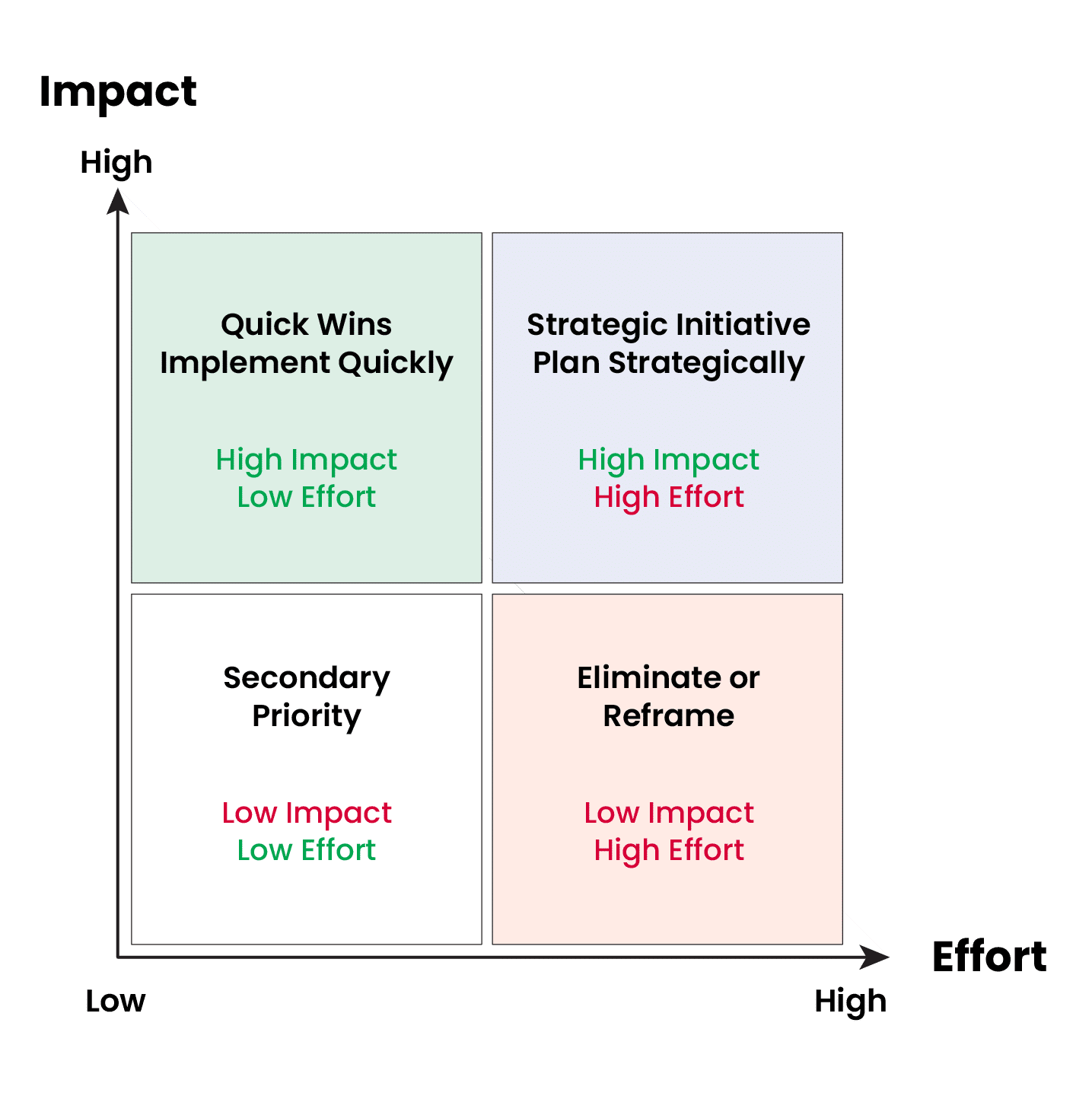
Because resources, budgets, and execution capacity are limited, organizations must make choices and sequence initiatives over time. This is where a prioritization matrix becomes particularly valuable.
Using a Prioritization Matrix to Make Decisions
To facilitate prioritization, use a matrix that evaluates initiatives based on their potential impact and the level of effort required. Establish your own criteria to assess each dimension according to your objectives and implementation capacity.
In Closing: Choosing the Right Priorities at the Right Time
The goal is not to do EVERYTHING, but to take the RIGHT actions at the RIGHT time.
Effective HR planning does not begin with a list of projects. It starts with a structured reflection on the issues that will have the greatest influence on organizational success. This is precisely the purpose of the six questions presented in this article: clarifying strategy, anticipating future needs, identifying barriers to performance, assessing risks, measuring the potential impact of initiatives, and validating the organization’s actual capacity to execute them.
This reflection will typically generate several promising initiatives. The prioritization matrix then helps distinguish between initiatives that should be implemented quickly, transformative projects that require planning, actions that can be addressed later, and those that should be reassessed or abandoned.
This is how, in 2027 and in the years ahead, the HR function can focus its energy where it will create the greatest value for the business strategy, the growth of the organization, and the people who make it successful.
Need guidance identifying the HR priorities that will have the greatest impact on your organization?
Partager